
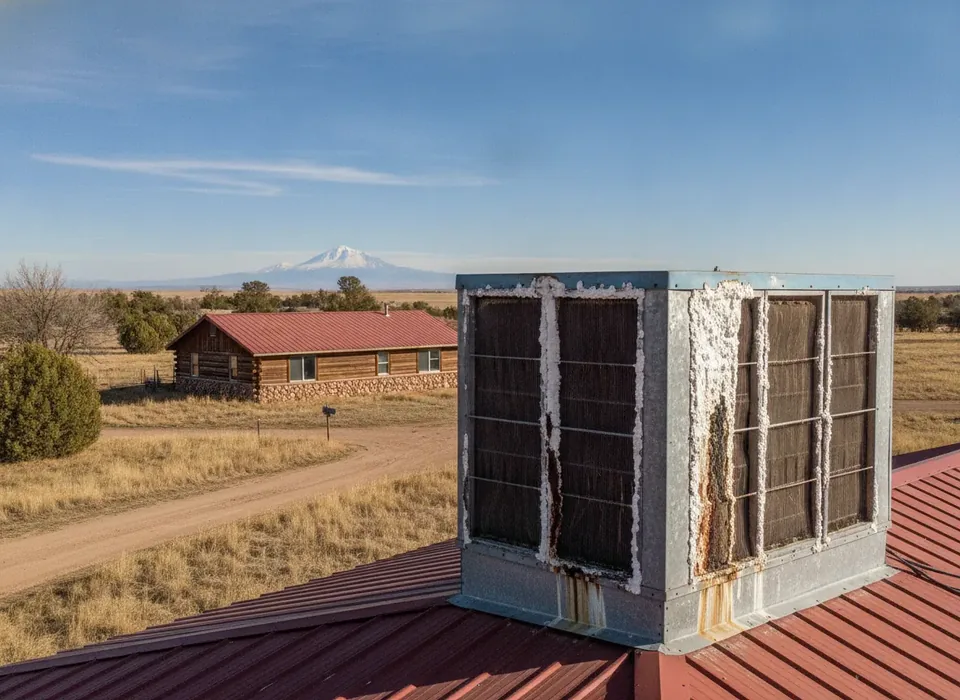
Swamp coolers, or evaporative coolers, are a fixture on the roofs of older Colorado Springs neighborhoods: boxy metal units on the Westside, in Old Colorado City, across the 1960s and 1970s streets of Security-Widefield and Stratmoor. They cool by pulling hot, dry outside air through water-soaked pads. The dry climate is what makes them work, with afternoon humidity around 40%, and the water is what makes them a mold question.
Every part of the system is wet for the whole summer. The pads are saturated, the reservoir holds standing water, the pump recirculates it, and the cooled air carries moisture into the house. A Colorado pediatric study found that evaporative coolers raise indoor humidity by about 10%. For a home built for dry air, that is enough to tip cool surfaces into condensation.
Who does what. Cleaning mold off ducts, ceilings and walls is remediation work. Repairing the cooler, its pump, float valve, water line or the roof curb it sits on is mechanical and roofing work. In the Pikes Peak region, HVAC repair goes to a mechanical contractor registered with the Pikes Peak Regional Building Department, not to a mold company.
Five places swamp cooler mold shows up
1. The pads
Aspen pads and synthetic pads both grow biofilm and mold when water sits on them. Colorado Springs water is hard, so mineral scale builds on the pads and holds moisture longer. The smell that comes through the vents on the first hot day of June, often described as wet dog or dirty sock, is usually the pads. Pads are a maintenance item and are typically replaced each spring.
2. The reservoir and pump
The water tray at the bottom of the unit holds a few gallons all summer. Without a bleed-off line or regular draining, it becomes a slime pan. Mold and bacteria in the tray get aerosolized by the blower and distributed through the ductwork.
3. Supply ducts and the plenum
Cooled, moist air moving through metal ducts condenses on the duct walls, especially where ducts pass through an attic that is 130°F in July. Dust in the duct gives the moisture something to grow on. Staining or fuzz on the ceiling register and a persistent musty smell when the blower runs point here. This is the part of the job on the HVAC, duct and swamp cooler mold page.
4. Roof penetrations and the curb
Rooftop units sit on a curb that is cut into the roof. Over years, the flashing and sealant around it crack under high-altitude sun and hail, and the unit's own overflow or a leaking float valve dumps water onto the roof. That water tracks down the duct chase into the attic and the ceiling drywall below. A ring stain on the ceiling around the main register is the classic sign, and it often gets blamed on the roof when the cooler is the source. The 2016 and 2018 hailstorms damaged a lot of rooftop units along with the shingles around them.
5. The rooms themselves
With indoor humidity up 10% and windows cracked open to let the cooled air out (the way swamp coolers are meant to run), cool surfaces in the house can condense: toilet tanks, uninsulated basement ductwork, the back of closets on exterior walls, and window frames on the shaded side. Running the cooler with the windows closed makes this worse, because the moist air has nowhere to go.
Why the musty smell matters even when you see nothing
The smell is the easy part. The question is whether it is pad odor, which goes away with fresh pads and a clean tray, or growth inside the ductwork and ceiling, which does not. A simple test: replace the pads, drain and scrub the tray, and run the unit for a week. If the smell returns on blower-only mode with the pump off, the problem is downstream of the pads. At that point a mold inspection with a look inside the plenum and at the ceiling around the register is worth more than guessing.
Shutdown and startup: where most problems start
Most swamp cooler mold is a maintenance story. In fall, the unit should be drained completely, the pads removed, the tray dried, the water line shut off and drained to prevent a freeze, and the cabinet covered. A unit that is covered while still wet spends the winter as a closed, damp box. In spring, the reverse: new pads, a scrubbed tray, a check of the float and pump, and a look at the roof curb and sealant before the first run. Homeowners can do the pads and tray. Repairs to the pump, float valve, water line or blower motor, and anything involving the roof curb or electrical, go to an HVAC or roofing contractor.
Who to call for which part
| Problem | Who handles it | Typical published range |
|---|---|---|
| Dirty pads, slimy tray, startup odor | Homeowner maintenance or HVAC service | Pads and cleaning supplies; service call varies |
| Leaking float, failed pump, cracked tray | PPRBD-registered mechanical contractor | Repair quote from the contractor |
| Leaking roof curb or flashing | Roofing contractor | Repair quote from the roofer |
| Mold in ducts, plenum or on registers | Mold remediation company (duct cleaning or replacement) | HVAC / ducts $3,000–$10,000 (Fixr 2025) |
| Stained or moldy ceiling below the unit | Mold remediation company, then drywall rebuild | $10–$25 per sq ft affected (This Old House 2026) |
The remediation figures are national published ranges, not quotes; local numbers come from the companies. Ductwork replacement that involves new mechanical work needs a PPRBD permit pulled by a registered contractor. The cost guide has the full price table.
Replace or keep the cooler?
That is a comfort and energy question more than a mold one, but it comes up on every job. A well-maintained cooler in a dry climate is a reasonable system. A cooler that has leaked into the ceiling twice, sits on a rotted curb and has ducts full of growth is often cheaper to retire than to keep remediating around. If you switch to refrigerated air, the roof opening still needs to be properly closed and flashed. Either way, the mold cleanup comes first; a new unit on a moldy plenum just moves clean air through a dirty box.
Renting with a swamp cooler
If you rent and the cooler has caused mold in the ceiling or ducts, Colorado law requires your landlord, within 72 hours of notice of mold associated with dampness, to install containment, stop the water source and run HEPA filtration, then complete remediation with post-remediation testing. Minor mold on surfaces that normally get wet, such as the pads themselves, is excluded. Put your notice in writing. This is general information, not legal advice; details are in the Colorado 72-hour rule guide.
Frequently asked questions
Can a swamp cooler cause mold?
Yes. The pads and reservoir stay wet all summer, cooled moist air condenses in ducts, leaks at the roof curb run into the attic and ceiling, and the unit raises indoor humidity by roughly 10%. Most problems trace to maintenance gaps, a leaking float or overflow, or failed flashing around the roof opening.
Why does my swamp cooler smell musty?
Usually dirty pads or a slimy reservoir, which fresh pads and a scrubbed tray fix. If the smell returns with the pump off and only the blower running, the growth is likely in the ducts or plenum, and that is a job for a mold inspection and remediation company.
Who repairs the swamp cooler itself?
A mechanical (HVAC) contractor registered with the Pikes Peak Regional Building Department handles the pump, float, water line, blower and any electrical. Roof curb and flashing leaks go to a roofer. Mold remediation companies clean or replace affected ducts, ceilings and walls, but do not repair the cooler.
Should I run the swamp cooler with the windows closed?
No. Evaporative coolers are designed to push air through the house and out open windows. With windows closed, humidity climbs and moisture condenses on cool surfaces, which is one of the fastest ways to get condensation mold in bathrooms, closets and basements.
Ready for numbers from local companies? Request free quotes or call Call (719) 642-1761. Colorado Springs Mold Pros is a free quote service, not a mold company; independent local companies reply to you directly.