
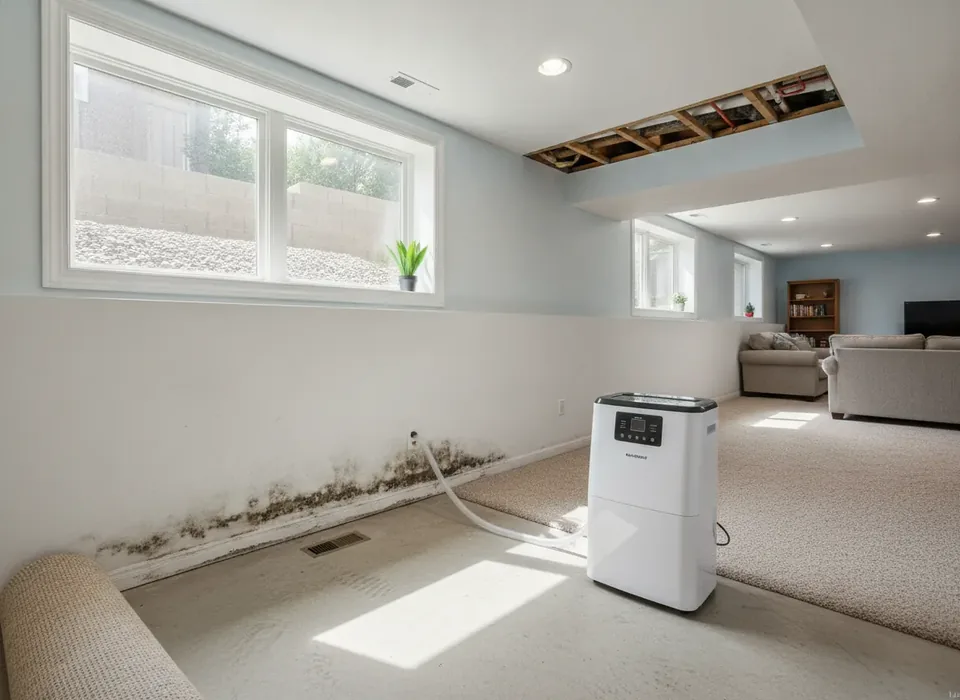
People searching "is mold common in Colorado" are usually surprised by the answer. Colorado Springs sits at about 6,035 feet in a semi-arid steppe climate. NWS normals for 1991–2020 put annual precipitation at 15.91 inches, annual snowfall at 32.5 inches, and the city sees roughly 243 sunny days a year. Older humidity averages show about 52% relative humidity in the morning and 40% in the afternoon. None of that sounds like mold country.
Yet mold inspection and remediation companies in the Pikes Peak region stay busy. The reason is simple: mold does not need a humid climate. It needs a wet surface, organic material and a few days. In Colorado Springs, wet surfaces come from specific, local events rather than the air.
The pattern to remember. Mold here is almost always a local moisture event: a leak, seepage, a failed appliance, a roof breach. Find the water first, and the mold explanation usually follows.
Water arrives in bursts, not drizzle
About 65% of the city's precipitation falls between May and August. July averages 3.12 inches and August 2.96 inches, much of it in afternoon thunderstorms that can drop an inch in an hour. A downspout that disconnects or a window well that fills in one storm can push water into a basement that stays dry the other 360 days of the year.
Monsoon season also brings flash floods. The 2013 storms over the Waldo Canyon burn scar sent water and mud through Manitou Springs and west Colorado Springs, and El Paso County has had federal flood declarations in 2013, 2015 and 2023. Floodwater is Category 3 water, which means a full remediation rather than a mop-up. See water, snowmelt and flood mold for what that involves.
Seven local ways water gets into a Colorado Springs home
1. Snowmelt against the foundation
March is the snowiest month at 5.7 inches on average, followed by April at 5.5. Spring snow is wet and melts fast under a strong high-altitude sun, saturating the soil against basement walls and crawl space footings. Roughly a third of local homes have basements, per industry estimates, and many more have crawl spaces. Both are the most common place local companies find mold. Our snowmelt basement guide goes deeper.
2. Frozen and burst pipes
Cold snaps hit hard here. In February 2021, Colorado Springs firefighters answered more than 200 reports of broken sprinkler lines in a few days. In January 2024, at least 25 burst pipes and sprinkler heads were reported in under a week, including at fire department headquarters, and the department noted that damage often appears only after the thaw. A burst supply line in a wall can soak drywall, insulation and subfloor before anyone notices.
3. Hail-damaged roofs
The July 2016 hailstorm produced about $352.8 million in insured losses in the Colorado Springs area, and the August 2018 storm brought softball-size hail to the southwest side and Fountain. Cracked shingles and lifted flashing do not always leak right away. They leak a little with every storm, and the attic decking and ceiling drywall below stay damp long enough for staining and growth. More in roof leak, ice dam and attic mold.
4. Ice dams
Heavy wet snow, bright sun by day and sub-freezing nights produce repeated melt and refreeze at the eaves. Water backs up under shingles and drips into the attic or down inside exterior walls. Homes with warm, poorly insulated attics get it worst.
5. Swamp coolers
Evaporative coolers work well in dry air precisely because they add moisture. Pads stay saturated all summer, water trays overflow or drip, and the cabinet sits in a roof opening that can leak when seals age. A Colorado pediatric study found evaporative coolers raise indoor humidity by about 10%. Read swamp cooler mold for where to look.
6. Whole-house humidifiers
Winter indoor air in the Front Range is dry enough that many homes run a furnace-mounted humidifier. Set too high, it pushes moisture toward cold surfaces: single-pane windows, under-insulated exterior walls and the underside of a cold roof deck. The common rule of thumb from HVAC sources is 30–40% indoor humidity in winter, and lower on the coldest nights.
7. Everyday condensation
Bathrooms without a working exhaust fan, bath fans that vent into the attic instead of outdoors, and kitchens with a recirculating range hood all put water vapor on cold surfaces. A window sill that collects condensation every January morning grows mold by February. See bathroom and window condensation mold.
Why dry air makes local mold harder to find
In a humid climate, mold shows up on walls and ceilings in plain view. Here, the room air dries out quickly, so surfaces that are exposed rarely stay wet. The water that lingers is inside wall cavities, under flooring, behind basement finish and in crawl spaces, where there is no airflow and no sun. That is why a musty smell with nothing visible is a common complaint, and why moisture meters and thermal cameras do most of the work in a local inspection. The inspection and testing page explains what an inspector checks.
Does cold weather kill mold?
No. Freezing temperatures slow growth and can make mold dormant, but the spores and the colony survive and resume growing when the surface warms and stays damp. A basement wall that grew mold during April snowmelt does not clean itself over a Colorado winter. It waits.
What this means for your home
| Season | Typical local moisture source | Where to look |
|---|---|---|
| January–February | Frozen pipes, humidifiers, window condensation, ice dams | Exterior walls, window sills, attic eaves, ceilings below bathrooms |
| March–May | Snowmelt, saturated soil, first storms | Basement walls, window wells, crawl spaces, sump pits |
| June–August | Thunderstorms, hail, flash floods, swamp coolers | Attic decking, ceilings, cooler cabinet and ducts, basements |
| September–December | Leftover roof damage, first freezes, humidifier startup | Attic, exterior hose bibs and pipes, bath fans |
If you have found mold, start with the water. Stop it if you can, photograph the area, keep kids and pets out, and avoid scrubbing a large patch, which spreads spores. Then get quotes. The cost guide shows the published ranges, and mold removal and remediation explains what the companies do on site.
Frequently asked questions
Is mold common in Colorado Springs?
Yes, despite the dry climate. Mold needs a wet surface, not humid air, and local water events such as snowmelt seepage, frozen pipes, hail-damaged roofs, swamp coolers and whole-house humidifiers supply it. Mold here tends to hide in wall cavities, basements and crawl spaces rather than on open surfaces.
Will mold die over a Colorado winter?
No. Cold slows growth and can make mold dormant, but the colony survives and resumes when the surface warms and stays damp. The material still needs to be cleaned or removed and the moisture source fixed.
Why does my house smell musty when I cannot see any mold?
In dry air, exposed surfaces dry fast, so active growth is usually inside a wall, under flooring, behind basement finish or in a crawl space. A mold inspection with moisture readings is the usual way to find it without opening walls at random.
Should I run a humidifier in winter?
Many Front Range homes do. HVAC sources suggest keeping indoor humidity around 30–40% in winter and lower on very cold nights, and watching for condensation on windows, which signals the setting is too high for the outdoor temperature.
Ready for numbers from local companies? Request free quotes or call Call (719) 642-1761. Colorado Springs Mold Pros is a free quote service, not a mold company; independent local companies reply to you directly.